
Comprehensive tax reporting services to keep your business compliant and running smoothly.
- Report preparation and lodgement of Business Activity Statement and GST
- PAYG and Superannuation reporting and lodgement
- Report preparation and lodgement corporate income tax returns
- Report preparation and lodgement of Fringe Benefit Tax returns is applicable

Overview of Taxation Requirements for Subsidiary Companies in Australia
Subsidiary companies in Australia are subject to various tax obligations, including corporate income tax, withholding taxes on profit repatriation, and other related tax filings. Here is an overview of the key taxation requirements for subsidiary companies:
Corporate Income Tax
Tax Rate: Subsidiary companies in Australia are subject to the standard corporate income tax rate, which is currently 30%. For small businesses meeting specific criteria, a lower rate of 25% may apply.
Taxable Income: The corporate income tax is levied on the taxable income of the subsidiary, which is calculated as gross income minus allowable deductions, including business expenses and depreciation.
Goods and Services Tax (GST)
Registration: Subsidiaries with an annual turnover of AUD 75,000 or more are required to register for GST.
GST Rate: The GST rate is 10%, and it applies to most goods and services provided in Australia.
Lodgement of GST Returns: GST returns (Business Activity Statements) are typically lodged quarterly or monthly, depending on the company’s turnover and reporting preferences.
Fringe Benefits Tax (FBT)
Tax on Benefits: If the subsidiary provides non-cash benefits (fringe benefits) to its employees, it may be liable for Fringe Benefits Tax (FBT). This tax is separate from income tax and is calculated on the taxable value of the benefits provided.
FBT Year: The FBT year runs from April 1 to March 31, with the FBT return due by May 21 each year.
Pay As You Go (PAYG) Withholding
Employee Withholding: If the subsidiary employs staff in Australia, it must withhold PAYG amounts from employee salaries and wages. These amounts must be remitted to the ATO on a regular basis, typically monthly or quarterly.
Annual PAYG Payment Summaries: The subsidiary must provide PAYG payment summaries to employees and report these to the ATO at the end of each financial year.
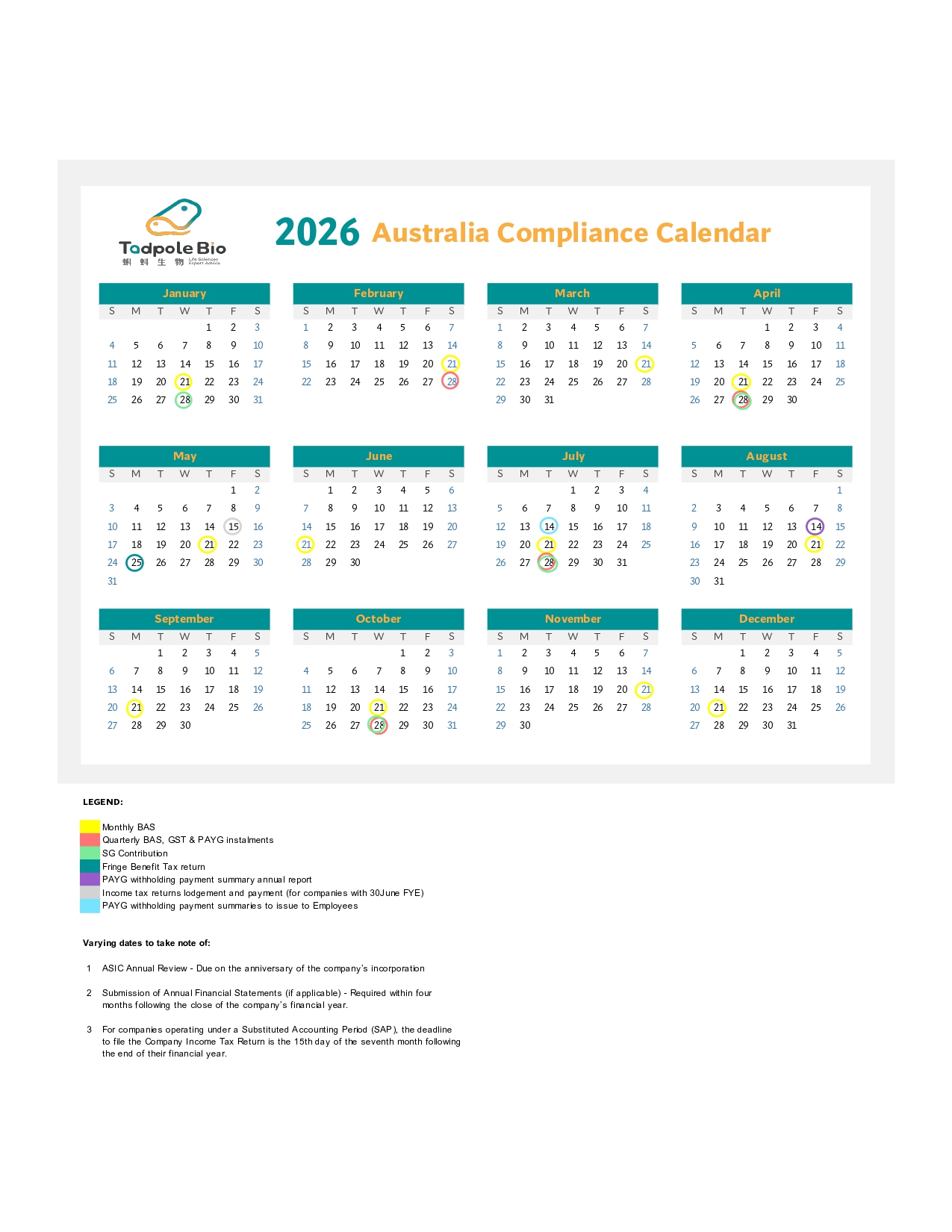
Compliance Calender
View our 2026 Compliance Calender
Learn more about our Bookkeeping/Accounting & Tax Reporting Services:
Neeed help Understanding?
Schedule a call with Dr. Qiao to see where Tadpole Bio can help you scale in Australia.

Advisory support for every stage of your biotech journey
Partner with Tadpole Bio to turn regulatory and commercial complexity into strategic advantage.